Monday, November 8, 2021

DEAR COOKIE MONSTER


My granddaughter, who dwelt in my home since she was three, recently left us to study at one of our great universities.  We sent her in great pride and sorrow.  No longer can we look forward to her infectious smiles in the morning and to her lighthearted prater after the long hours at school.  No longer will we be on the receiving end of her morose countenance by night followed by her small hints of disapproval.

Truth be told; however, we’ve not shared her company this past year.  Relations between her and her mother (my daughter) had grown dangerously acrimonious and so, after her eighteenth birthday on the advice of her therapist, my granddaughter slipped away in the night to live my oldest son, his wife and three small boys.

It is with no small embarrassment that I have to confess that, prior to my granddaughter’s departure, I had no idea things had gotten so bad between my daughter and herself.  (They had!)  The antecedents of those hostilities have now long past into irrelevance now that she is away at college; but I’m afraid the animosity remains.

I have no memory of all that follows.

This is a long way of saying my granddaughter had no way of knowing about my most recent medical adventure.  It seems that I went to sleep one night in late September and didn’t wake up the next day.  After much consternation, my wife summoned help from the fire department and our personal physician to get me to the hospital.  I apparently was with it just enough for me to object and express displeasure at attempts to move me.  The firemen hesitated feeling the need for my consent; thus the phone call to my doctor.  Somehow, they got whatever assent they thought was needed and off I was to the E.R. 

Once at the hospital, my condition deteriorated.  I was put into the critical care unit and on a ventilator.  The staff gravely told my wife that it was likely I would not survive the night and “end of life” questions might need to be addressed early the next morning.


Dear Cookie Monster:


Imagine the jolt and bewilderment waking up with three doctors in your face.   “Crabby, do you know where you are?”  Before you answer, you make note that they are just as startled as you are.   Turns out, I was at Community East Hospital two days after I last remember going to bed.

“Do you remember several people talking to you. Trying to get your permission to take you to the E.R.?”

“I don’t remember talking to anybody.”

And so it was:  my latest adventure in medical custody. The first thing I got straight with my captors was that I wanted to go home.

“Mr. Dooley, what you need to understand right now is that you just experienced another episode of congestive heart failure, and we can’t let you go home right now. Maybe in a few days; but we’d advise a few weeks at a rehab facility in any case.  Right now, we’re working to get all the excess water out of your body.”

Well…a week later, they let me go home.

Now, you may wonder why your grandfather, the old geezer of all old geezers, feels the need to glory himself by living up to such a cheesy stereotype.   “What the hell is so important at home that you want to get there?” 

In short, the answer is:       NOTHING.

So, what’s the big hairy deal?  One must understand the true nature of hospitals.  They say someone “X” is resting at “St. Bozo’s Medical Hospital.”  When they talk like that you can be confidant they are lying.

The first thing to know about hospitals is that you cannot “rest” because they will not leave you alone. Every three or four hours they come in to “take your vitals.”   Invariably, when I am in the hospital, the day begins at midnight as my nurse takes my temperature, blood pressure, pricks one of my fingers to measure my blood sugar, take her stethoscope and listen to my heart, and then put a pulse oximeter on another finger to find out what the oxygen mixture is in blood.

For me, they never like my first “numbers”; so, they have to do it all again.  Invariably, they always like the second results. This all takes at least ten minutes and often can easily take twice that much time. Then they say: “You can go to sleep now.”  Which usually takes me an hour to settle down and drift away.

Then at the crack of four in the morning, they do it all again. FOUR IN THE MORNING! So much for rest. They do vitals every four hours.  If your doctor shows up, they will do it all again just for themselves[MD1] .

But the biggest killer for me is the sheer boredom.  Apart from all the doctor and therapy visits there is nothing to do.  My music isn’t there.  My computer isn’t there.  TV is the worst.  (Many of the channels are simply weird) You end up praying a lot. The first subject of prayer is your health. Obvious, I mean, you are in the hospital. The second subject of prayer is to go home. 

Home.  Probably the last place you want to be.   At your age, I counted my dorm room as my home.   I loved my mother, but I didn’t get along with Chuck.  He and I always seem to find a way to butt heads.  Actually, I swore that he came home from work looking for something to pick a fight over. 

One morning, he summoned me to the bathroom to lecture me over how they were not going to pay for my auto insurance, and he was never going to allow me to use the car. 

“If I tell you not to go someplace, you just turn around and go there.   If I tell you you can’t drive above forty you’ll drive eighty.  You don’t do what I tell you to, so you don’t get the car.  So how do you like them apples?”

I had no idea where all this came from.  I had never mentioned driving or getting a car—much less expect Mom and Chuck putting me on their driver’s insurance.  I could see the future and didn’t want one more thing for Chuck fight and bitch over with me. 

When I left home for college August 24, 1971, I was finally free.

I missed you something awful last year; but I understood.  Looking back, I was just a kid.  Hell, when your grandmother married me, we both were still just kids.  There was still a whole lot we did not understand about the world.  But we were free.

Enclosed is a little something.  Use it however you choose.  I know something unexpected always comes up—especially when you are first starting out.


I love you, Cookie Monster


Grandpa Crabby


 [MD1]

Wednesday, October 14, 2020

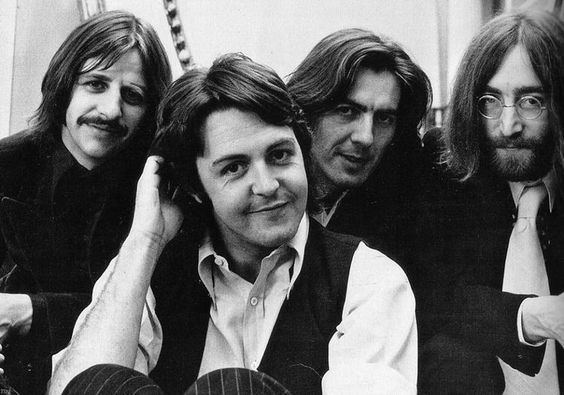
DARK YET INDISPENSIBLE: Review of THE BEATLES-- otherwise commonly referred to as THE WHITE ALBUM


Many younger listeners prefer THE WHITE ALBUM above all other Beatles albums. Above even the gold standard of Sgt. Pepper and the highly beloved Abbey Road. I don't share this enthusiasm. I place the afore mentioned Sgt. Pepper and Abbey Road in the top two followed by Revolver and Rubber Soul. Rounding out the top five would be the unjustly neglected Magical Mystery Tour. THE WHITE ALBUM would then come in sixth.

The Beatles never made a bad album. LET IT BE may be the lone exception--a failure so curious that it is difficult to merely tag it as "bad". (So "bad" it's good in a peculiar sort of way.).

Coming after the psychedelic period, THE WHITE ALBUM is a surprisingly dark album--the previous focus of peace and love is missing here. The record anticipated the stripped down production and "confessional" songwriting found in prevalence during the early 1970's. While this was a welcome development for some, THE WHITE ALBUM was something of a let down initially. Most buyers were disappointed in the absence of the *Hey Jude/Revolution*. The Beatles had a preference for not putting their singles on the albums; but in this case it this was a significant error.

Like most double albums, this one could easily been paired down to a single disc. Many of the cuts are frivolous while others bog things down. Harrison felt on reflection that some of the tracks could have been released as B sides. Still many critics acclaim THE WHITE ALBUM as a celebrated explosion of musicianship in which the Beatles demonstrated that they could play in number of styles--as if such a demonstration was necessary. Still, many listeners like the album precisely because it is so varied.

Whatever else could be said, the wide variety of styles signaled a foreboding and desperation. With the exception of the first side, each song is distant and isolated from all the others. There is a sense of fragmentation and disassociation on THE WHITE ALBUM not found on any of the Beatles previous records. Indeed, now that we know some of the history behind the scenes, it can be seen that The Beatles were fracturing. In retrospect, without the glue of Brian Epstein, their recently deceased manager, each band member was spinning of into separate directions. The Beatles, particularly Lennon and McCartney, had in the past bounced off each other to good effect-- jolting each from their own element.. Collaboration was deteriorating and along side many flashes of brilliance weaker musical instincts slithered in.

Only side one hangs together in the flow of tracks to form a "whole" which is both pleasing and memorable. Three great songs, even the lesser songs stick with you, fun, humorous and recklessly inventive -and it absolutely rocks. The three remaining sides of the original LP version suffer in comparison.

Side one opens with a great coupling in Back in the USSR and Dear Prudence. Parody is a much overused word--too often meaning a barb thrown at others. In fact the Beatles frequently paid homage to the music they loved from other musicians. *Back In The USSR* is no more a parody of the Beach Boys or Elvis (both of whom McCartney loved) than *Got To Get You Into My Life* was of Motown. This is seamlessly followed by Dear Prudence which sounds better with each listening and is far more complex as a song than it seems. The rest is pleasant enough and one song follows another in sharp focus. But the room stops still with *While My Guitar Gently Weeps*. Harrison's *Guitar* towers over the rest of the album and is the one song that immediately jumps to mind in any discussion of THE WHITE ALBUM. McCartney and Lennon are like the older brother turning out excellent work. But Harrison is like the little brother who pops out of nowhere with a piece of work that blows the daylights off the competition. The acoustic version found in the Anthology series reveals it is actually a simple song that lends itself to a relaxed and tender presentation. But here it is played with vehemence with the guest guitar solo by Eric Clapton. The Beatles loved silly songs for their own sake. Yet here, following the failure of the age of peace and love to appear, lyrics of unvarnished grief are put on full display.

Side Two does not hang together well and most tend to pick their favorites to listen to rather than the entire side. *I'm So Tired* is a Lennon downer that ruins this side for me. Much better is *Rocky Raccoon*--a McCartney nonsense song. *I Will* is a lovely McCartney romance that remains an unjustly neglected song by even McCartney's diehard fans. Lennon's *Julia* is one of the sweetest songs he ever wrote--infuriately used as a bit of psychoanalysis into his soul by his biographers (Julia was his mother's name).

Side three was a favorite of early FM rock radio. *Birthday* just rocks. *Me and My Monkey* is joyous, free flying a rocker and truly funny. *Helter Skelter* is one tough hard rocker which some claim is a precursor to heavy metal. *Long Long Long* anticipates much of ALL THING MUST PASS and the rest Harrison's output in the 1970's. However, here THE WHITE ALBUM really needs a kickass rocker--perhaps Lennon's *Bulldog* or a reworking of Harrison's own *It's All Too Much* (both found on the YELLOW Submarine soundtrack).

Side four is a disappointment. The version of *Revolution* appearing here has its own charm but in the context of the album is slow, plodding, and understated where the excitement and full blast rock and roll of the original is needed. John Lennon later claimed that he preferred the slower version--but like many things he said in the 1970's he was just plain wrong. Harrison's big band *Savoy Truffle* is quite good.

In view of what was to come after the Beatles broke up, it is interesting to note that the styles of music we now associate with each Beatle are pretty much here. If you separate and group each song according to its author, we find the spiritual and sometimes sarcastic George, the gentle and good hearted Ringo, the acidic yet sometimes sentimental John, and the entertainer Paul with one foot in rock and roll and the other foot in the old English music hall.

Taken as a whole, John's contributions are not his best. *Yer Blues* is a

desolate and pointless barb aimed at the British blues revival. Revolution #1 had none of the exhilaration of the original. *Sexy Sadie* is just plain tedious. *I'm So Tired* makes one uncomfortable and not in a good way. On the other hand, contrary to his common image, THE WHITE ALBUM contains two of Lennon's sweetest and charming compositions: *Dear Prudence* and *Julie*. It is tempting to search *REV # 9* for a deep meaning in the chaos--there is none there. It is only a cut and paste job of various sounds and spoken word. George Martin hated it and opposed its inclusion. It sucks the air out of the room. It would have been much better if *Hey Jude* took its place.

Absent the earlier psychedelic wash, much of McCartney's work remains charming but devoid of "cosmic significance". This is not to say that much of his contributions to THE WHITE ALBUM aren't truly great. It is just that he has a penchant to write very minor work. As much as many complain of the deteriorating quality of McCartney's work in the 1970's, the truth is it is all found here.

Harrison hits two out of four with *My Guitar* and *Savoy Truffle* --making one wish that he caught the fire again in his later work. Ringo Starr remains the "gentle giant" who is more fun than musically significant.

Perhaps one's opinion of THE WHITE ALBUM depends on how one views psychedelic music. If you have an innate understand of the multi-layered, slightly touched noise, THE WHITE ALBUM is a step down. If you feel that it is rubbish, THE WHITE ALBUM is a revelation. What is clear is that the Beatles largely began the psychedelic era and then ended it after a few years. Just compare the chronology of the Beatles and the Stones and you'll get a hint of others following in the Beatles wake. THE WHITE ALBUM is dark, yes. But it is also indispensible.

Thursday, May 7, 2020

SUFFERING


Some reading his post might not know that I am a diabetic and in the last three years I have lost my two feet.   The first was a below knee amputation on May 12, 2017.  By late July I received my prosthesis and was up and walking right away using two canes.  (I had been experiencing problems with my balance for several years prior—making he use of one cane necessary.) 

The most recent amputation was all the way last October.    Unfortunately, the incision from the surgery took its own sweet time to heal; so I was only cleared to get another prosthesis two weeks ago.  I was supposed to receive my new peg-leg today; but the prosthesis people called yesterday to cancel my appointment.  It seems my surgeon has yet to submit critical documentation needed in order to apply for an authorization from my insurance company.  Just a matter of paperwork I was assured.

Since my discharge from the rehab hospital last early November, I’ve gotten around the house by crawling on the floor.  My physical therapists objected to this method of getting around but my wheelchair will not fit through any of the doorways in my house.  (Very common problem in almost all modern homes.)  “Surely, there must be a better way of you getting around than crawling” they protested.   But they themselves had no other solution; so crawling it had to be.

Crawling at my age is rather rough on the knees and knee pads can only protect you so much.  So, after all this time I was really looking forward to standing and walking upright once again.  When they cancelled my appointment, I was very disappointed.  I was downhearted for a while.  Then I decided this was just another bump in the road.  Two weeks or maybe even another month would be nothing after all this time.  In time, all would be well.

Invariably, someone(s) will ask me the same question.  When my wife and I lost our second child to miscarriage, a close friend asked me if it made me question my faith.  I honestly never felt the need to challenge God in His goodness as a result of losing our baby.  I trusted that it was in God’s hands and our child was safe in his care.  Not that I didn’t experience grief.  My wife and I suffered our loss quite severely.  But we believed in His providence and good will for us.

Some would say that that was quite cold.  I don’t know about that.  Seems to me Christian faith is made of sterner stuff than that.  On the other hand, when other Christians feel their faith undermined by tragic events, it seems coldhearted not to understand their predicament.  At least so it seems to me.  In sharing their suffering, however, we are careful not to shower them with dubious assurances such as “God must have needed Bill/Jane with Him in heaven” or “There had to be something wrong with the child and God took him/her so you and Bill/Jane wouldn’t suffer”.  Trust me.  Nothing enrages a pair of parents

Some would suggest that my response is more due to my ethnic characteristics (Northern European) than to any Christian faith.   That is, I simply am reflecting a normal “Nordic” stoicism to personal tragedy.  Perhaps.  One should never discount the typical traits of one’s ethnic background while seeking the wellsprings of one behavior—although, in my case, the Irish are not known to be natural born stoics.  Nevertheless, the Lutheran faith I was brought up in teaches that tragedy and suffering is to be expected even among those who love the true God.

The Christian has two natures.  One is the newly created being through baptism.  The other is the natural creature born in sin.  As long as the Christian is also a creature—which he/she will be until the resurrection—he/she will share in the lot of all human beings.  Life is full of tragedy and suffering.  Our ancestors knew that.  Suffering was all around them.  Most of human history is signified with poverty, disease, and warfare.  It is only in more modern times with modern advances in science, production, ans statecraft many have come to think these are unnatural to men—or at least should be.  World War I disillusioned many of their belief in such progress.  But the notion that health, plenty, and peace are our natural birthright still carries on.  Such notion brings some to rage against heaven their whole lives.

The Christian should know better.   Perhaps, in time, we would see the good that would come of particular evil events and sufferings.  But most of the time, such things will not be revealed to us.  Catastrophe and heartbreak will just appear to be senseless—without reason—or at least without good reason.

Why I should go another two weeks, two months, or two years without a prosthesis for my left leg… crawling on the floor worse than a dog…is probably something I’ll never know.  Believe me.  That is suffering I’d easily wish to forgo.  Disappointment I wish would not have come.  Nevertheless, so it is.  I trust all is in the hands of our loving God.

Thursday, May 9, 2019

GOLDEN AGE: MY NEW FAVORITE ALBUM

My tastes in music runs from The Allman Brothers Band, Derek and the Dominoes, The Stones, Trower, Led Zeppelin, to Ricky Nelson. So it may come as a surprise that I tell one and all that Kacey Musgraves’ Golden Hour is well worth a listen.

The Academy of Country Music and the Country Music Association both awarded Golden Hour as the 2019 album of the year. In addition, the Grammy Awards picked Golden Hour as the Country Album Of The Year.

I don’t know how country Golden Hour is. It’s nothing like anything else in country music these days. Certainly no Miranda Lambert or Carrie Underwood…or Keith Urban or Jason Aldean for that matter. But the country music folk claim Musgraves as one of their own. So there you go.

As far as any comparison goes, Shawn Colvin comes to mind…but not quite. One can occasionally hear a banjo, mandolin and pedal steel guitar sneaking in the background here and there; but to my sensibilities, that’s as far as country it gets.

All that being said, Golden Hour is deep and heartfelt album. An assembly of songs of easily recognizable human emotions and predicaments. I am particularly fond of “Oh, What A World” and “Happy & Sad”. Give it a listen; then play it a few times more. I promise it’ll grow on you.

Thursday, April 18, 2019

ALTHOUGH THAT DAY IS FEARFUL AND TERRIBLE, EVEN SO: COME LORD JESUS.

Mark 13:28-32 New International Version (NIV)

“Now learn this lesson from the fig tree: As soon as its twigs get tender and its leaves come out, you know that summer is near.  Even so, when you see these things happening, you know that it[a] is near, right at the door.  Truly I tell you, this generation will certainly not pass away until all these things have happened.  Heaven and earth will pass away, but my words will never pass away.  But about that day or hour no one knows, not even the angels in heaven, nor the Son, but only the Father.”


Here in Indianapolis, we don’t know much about fig trees; but we do know a fair amount about the weather.  After all, as Hoosiers are wont to say, if you don’t like the weather, just wait fifteen minutes.  We may complain about the weather; but, for the most part, the winds, the rains, and the sunshine are fairly predictable.  Great days can be really fantastic and the less than great days are at least tolerable—until they’re not.

There are times when ominous thunderstorms or snows are gathering and moving our way.  The weatherman on television anxiously warns us—trouble is coming.  Houses and businesses could be seriously damaged.  Rivers could flood.  Many might be without power and clean water for days.  Worst of all, many people’s lives will be threatened and possibly lost.

We prepare the best we can.  But we cannot stop what is coming.  We stare at the weather map on television and watch the storms cross over the Dakotas, Iowa, and Illinois.  Will they break north and miss us?  Will they break south?  Could they stall over Peoria?  Could they lose their strength before they get here?

Christ’s own warning is actually two warnings.  Yes, Jesus does counsel us about the end of our world; but He also folds into that prediction the foretelling of the destruction of Jerusalem and the temple by the Romans (70 A.D.).  The fall of Jerusalem has already taken place.  The fall of the entire creation has yet to happen.
The fall of Jerusalem was terrible and horrifying.  Many died, others carried off into slavery, and others left to live among the ruins.  Rome was a great civilization; but what the Romans did to those who defied its rule was ruthless and appalling.  So what will happen that final day will be equally so.  Judgment for the evil of humanity could not be otherwise.  Against that day and for the hope of our deliverance, we are to be faithful and prepared.  Like the soldier even as the war approaches its end, we are to remain vigilant at our post.

But how close are we to the end?  Some think that Scripture leaves us enough clues to the exact events to tell us just how close.  While few narrow it down to the exact date, others are sure contemporary events are exactly what Scripture is talking about.  This is a kind of vanity Jesus tells us to avoid.  We should not claim to know what Jesus Himself does not know.  

The beings of Heaven know many of the secrets and mysteries of God; but the end of days is one secret the Father keeps to Himself.  Christ as our Savior and true man, renounced His right to this knowledge for our sake.  This fact brings out Christ's admonition all the more strongly:  be vigilant—and hope.

Lord, keep us mindful of Your return.  Although that day is fearful and terrible, even so:  Come Lord Jesus.

Monday, March 4, 2019

NOT THE GOD WE WANT


Mark 7:1-7 New International Version (NIV)


The Pharisees and some of the teachers of the law who had come from Jerusalem gathered around Jesus 2 and saw some of his disciples eating food with hands that were defiled, that is, unwashed. 3 (The Pharisees and all the Jews do not eat unless they give their hands a ceremonial washing, holding to the tradition of the elders. 4 When they come from the marketplace they do not eat unless they wash. And they observe many other traditions, such as the washing of cups, pitchers and kettles.[a])

5 So the Pharisees and teachers of the law asked Jesus, “Why don’t your disciples live according to the tradition of the elders instead of eating their food with defiled hands?”

6 He replied, “Isaiah was right when he prophesied about you hypocrites; as it is written:

“‘These people honor me with their lips,
    but their hearts are far from me.
7 They worship me in vain;
    their teachings are merely human rules.’


In the previous chapter (Mark 6), thousands of people rushed to Jesus to hear him teach, to be fed, and to be healed.  But here the Pharisees came not to hear the Word of Life; instead, they came to find fault—and they thought they found it.  A decisive failing.  They saw how Jesus’ disciples ate and in their questioning implied that Jesus could not be a true prophet because he did not uphold the tradition of the elders.  But Jesus did not quarrel with them.  Instead, He rebuked the Pharisees for the lack in their hearts.

The Pharisees tried to find fault in Jesus in the name of holiness.  The tragedy of the Pharisees is that they couldn’t see that the one true Holy God was standing right in front of them.  And so it is with us:  the God who calls us to follow is not the God we want. 

Except these days we try to pick God all apart according to what seems reasonable to ourselves.  We have our doubts—serious misgivings—about this God.  So much the Bible tells us about Him makes no sense to us.  Some parts even make us angry.  The God we want, the God that must be the most logical and real, is not the Christ Christians go on and on about.  We are so sure this Christ is too primitive and barbaric for any modern and intelligent person to believe in.  Yet, there He is.  And He deliberately isn’t measuring up.

So, we harbor our doubts.  Sometimes we hold on to them like prized treasures.  In certain times, we even take them out and use them as weapons to rage against Heaven.  And, like the Pharisees, we miss what is standing right in front of us.

Many of us, from time to time, have found ourselves sitting in the pew quietly reflecting on what hypocrites we are.  If you get to a certain age, perhaps it will quietly dawn on you that, whatever you may do, in one way or another a hypocrite you’ll remain.  We sing the hymns and the liturgy; but our hearts speak falsely.  We listen to the Word of God; but we live by our own code.  Surely, we think, Jesus would have harsh words for us.

Yet Jesus comes to us and says “peace be to you”.   The rank hypocrite you are and He says to you “peace”.  There is much to say about all this and rest assured someone will.  But know this:  Jesus didn’t come to give us more rules—or, more in our case, more answers.  He came to give Himself—and that is more than enough.


Turn my heart to you, my Lord.  From dawn until dawn, fill my spirit and thoughts with Your Word.  Let me be as You to all I meet.   Amen

Thursday, February 21, 2019

THE ONCE AND FUTURE THUNDERSTORMS


Mark 13:28-32 New International Version (NIV)


“Now learn this lesson from the fig tree: As soon as its twigs get tender and its leaves come out, you know that summer is near.  Even so, when you see these things happening, you know that it[a] is near, right at the door.  Truly I tell you, this generation will certainly not pass away until all these things have happened.  Heaven and earth will pass away, but my words will never pass away.

But about that day or hour no one knows, not even the angels in heaven, nor the Son, but only the Father.” 


Here in Indianapolis, we don’t know much about fig trees; but we do know a fair amount about the weather.  After all, as Hoosiers are wont to say, if you don’t like the weather, just wait fifteen minutes.  We may complain about the weather; but, for the most part, the winds, the rains, and the sunshine are fairly predictable.  Great days can be really fantastic and the less than great days are at least tolerable—until they’re not.

There are times when ominous thunderstorms or snows are gathering and moving our way.  The weatherman on television anxiously warns us—trouble is coming.  Houses and businesses could be seriously damaged.  Rivers could flood.  Many might be without power and clean water for days.  Worst of all, many people’s lives will be threatened and possibly lost.

We prepare the best we can.  But we cannot stop what is coming.  We stare at the weather map on television and watch the storms cross over the Dakotas, Iowa, and Illinois.  Will they break north and miss us?  Will they break south?  Could they stall over Peoria?  Could they lose their strength before they get here?

Christ’s own warning is actually two warnings.  Yes, Jesus does counsel us about the end of our world; but He also folds into that prediction the foretelling of the destruction of Jerusalem and the temple by the Romans (70 A.D.).  The fall of Jerusalem has already taken place.  The fall of the entire creation has yet to happen.


The fall of Jerusalem was terrible and horrifying.  Many died, others carried off into slavery, and others left to live among the ruins.  Rome was a great civilization; but what the Romans did to those who defied its rule was ruthless and appalling.  So what will happen that final day will be equally so.  Judgment for the evil of humanity could not be otherwise.

Against that day and for the hope of our deliverance, we are to be faithful and prepared.  Like the soldier even as the war approaches its end, we are to remain vigilant at our post.


But how close are we to the end?  Some think that Scripture leaves us enough clues to the exact events to tell us just how close.  While few narrow it down to the exact date, others are sure contemporary events are exactly what Scripture is talking about.  This is a kind of vanity Jesus tells us to avoid.  We should not claim to know what Jesus Himself does not know. 

The beings of Heaven know many of the secrets and mysteries of God; but the end of days is one secret the Father keeps to Himself.  Christ as our Savior and true man, renounced His right to this knowledge for our sake.  This fact brings out Christ's admonition all the more strongly:  be vigilant—and hope.

Lord, keep us mindful of Your return.  Although that day is fearful and terrible, even so:  Come Lord Jesus.