Sunday, September 15, 2013

EVEN WHEN STEEPLES ARE FALLING


At the conclusion of the affirmative vote on gay pastors in committed relationships being admitted into the ministry during the 2009 ELCA Churchwide Assembly, a great storm fell upon the city of Minneapolis.  During the storm the the steeple of Central Lutheran Church across the street from the convention center was damaged with the cross at its apex toppled over.
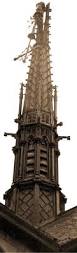
Both those for the reform and those against did not fail to take note of the wild storm which was said to have included a tornado.  The reform party took it as a sign of approval interpreting the storm as a symbolic manifestation the movement of the Holy Spirit in "freeing the captives".  Those long opposed to "practicing" gays in the ministry saw the destructive tempest as a sign of God's anger--pointing the wrecking of the cross atop Central Lutheran. 

As we all have long come to expect, how you saw those events depended on whichever theological perspective one holds.  Along with what the storm is thought to have said about the reform itself, it also admonition of negative judgment toward the other party. 

So how could two groups of individual belonging to the same Church come to two diametrically opposed positions on such a crucial question?  The reformers saw themselves as responding the imperative of the freeing Gospel with more than a hint that the traditionalists were stubbornly bound to "medieval" notions derived from base and evil impulses.  Traditionalists saw themselves as witnesses to the Word of God and the reformers bowing to the secular Spirit Of The Age--in effect baptizing one of the worst movements of the Zeitgeist.  Reformers were unfaithful apostates.  Traditionalists were homophobic haters.  (Get out the white sheets and fire up the ovens!)

Afterward, the leadership declared that the resolution was not binding on the consciences of all ELCA Lutherans.  You could disagree and still belong.  However one came out on the issue, it said nothing about the person as a faithful Christian.  In the light of the love of Christ, the diverse gathering of ELCA Lutherans should be bound together by love for one another.  In this sense, the question of practicing gay pastors was not a crucial question. 

Those opposed wondered how they were to stand behind and remain in a Church whose public teaching disregarded Scriptures.  They could not pretend otherwise.  It was a crucial question and it said exactly what kind of person you are.

In actuality, any Lutheran can tell you that historically Lutherans have had their differences even before the death of Martin Luther himself.  The Book of Concord was supposed to hammer out those differences.  Which it did for the most part.  What followed was a centuries old "discussion" of what Luther meant and the degree to which one held to fidelity the Book of Concord.  Aside these issues was the basic question of how Scripture is read and used--and just how authoritative Scriptures are themselves.  On top of all this, as it did with almost all Christian theological discussions and traditions, the Enlightenment threw a profound monkey wrench into these affairs.

What all the disagreements over "practicing homosexual ministers" point to is a basic conflict in how Scripture is read and explained. Truth be known: there are actually very few "literalists" within whatever variety of Lutheran Church you look into. Almost all Lutherans are open to one school of Biblical scholarship or another. Instead, it is more useful to speak of a continuum of "high" to "low" views of Scripture.

Those of the "high" view tend to be respectful of academic Biblical scholarship--even the historical/critical school--but ultimately believe that Scripture is inspired. Those of the "low" view tend to view Scripture as human-made and not divinely inspired--or inspired only in the loosest sense. Naturally, there are degrees along each side of the continuum; but the description holds up pretty well. The ramifications come out in the question of how seriously to take the actual written text of Scripture and what weight to give individual experience in discovering the "truth". Those of the "low" view tend to speak of discovering what Scripture has to say in light of the "modern context". More to the point, what was true at the time a particular passage was written may not be true today. Instead, the focus should not be on the particulars within the passage, but with the underlying theme as we understand it today. Such a theme may in fact overrule the apparent lesson of the passage. Those of a more radical bent will hold that there is no objective truth in Scripture except that which is discovered to be "true for me".

Those of a "high" view accept the human origins of Scripture; but also believe that Scripture came about by the intentionality of God. Thus the written text is taken seriously. Not every piece of Scripture is of equal value and this is where the proper division of Law and Gospel is helpful. In this view, scholarship is respected when it helps explain the meaning of Scripture. Scholarship which destroys meaning and is hostile to the devotional use of Scripture is viewed with critical suspicion. As opposed to those of the radical "low" view, "high" view folk hold the God's truth is true whether it is experienced or not.

While there is rarely a Lutheran who is a "pure" high or low, there is actually very little middle ground between the two sides. What is at stake is not just how to interpret any particular passage of Scripture; it is a conflict on what meanings will be assigned to the world around us. Taken on a national scale, it is easy to see why the ELCA finds it so difficult to achieve real consensus on any particular issue.

As the Sexuality Statement and the Ministry Recommendations which opened the gates to accepting pastors in committed gay partnership into the ministry of the ELCA was openly debated in the 2009 churchwide assembly, it was evident that the ELCA was already two churches with two separate witnesses.

The respective appeals to Scripture, tradition, and the Lutheran Confessions were so apart it seemed the "traditionalists" (who liked to refer themselves as the "orthodox") and the "reformers" (who liked to see themselves as "liberators")to utterly different texts.   As one commenter put it: "At one mic these foundational pieces of our heritage are" deployed like a set of wagons circled against a hostile world. At the other they are lifted like a sextant, that trustworthy tool used by mariners to navigate with confidence in the absence of fixed points."

There seems to me to be two uncomfortable truths at the heart of this.

For the orthodox, experience is deceptive and untrustworthy—especially when it challenges the plain sense and historic teaching of the texts Lutherans hold sacred or confessional. Any appeal to experience is compelling evidence of a morally and rationally bankrupt position. To tender insight grounded in experience is to play right into the evil one's hands.  It is not simply another viewpoint, it is profoundly wicked.  Claims of hearing the Holy Spirit apart from Scriptures is, if not entirely on the mark, resemble the heresy of enthusiasm.  Indeed, for the orthodox, there is little doubt as to how Martin Luther would have perceived these developments.

For the liberators, experience—while not immune to suspicion—is seen as a source possibly delivering a corrective and sacred insight. It is acknowledged as a wellspring from which the Holy Spirit may speak.  In addition, the liberators think they are working from with the best of historic Lutheran theological discernment. 

These positions are intrinsically polarizing and divisive.

The liberators and the orthodox have markedly different witnesses of very nature of God.  Are we listening to the freeing Word of a compassionate God--righting the centuries of cruelty and abuse?  Or are we turning a deaf ear to a God who sometimes demands hard, uncomfortable paths of us and are either willfully and mistakenly bowing before the altar of the Spirit of the Age?

At one large gathering of Lutheran laymen and clergy a year before the churchwide assembly in which the Church leadership hoped both sides would express their thoughts and listen to one another, I spoke of the disaster that would come.  In my view, however we sugarcoated it, one side was going to win and one side would lose.  The bishop at the podium said that it was not necessary to see it as anyone "winning" and he encouraged all gathered there to avoid any such assessment.  However, in view of the events which followed the churchwide assembly, this "no winners" proposition was either an exercise in self-deception at best or a cynical "blowing sunshine up" the orthodox' collective posteriors. 

In any event, later in the proceedings, the gathering was treated to what I have entitled the "parade of gay agony" as a number of homosexuals (both gay men and lesbians) gave testimony to the pain the Church inflicted on all same-sex individuals by its historical negative teaching against their sexual identity and that Christian acceptance and inclusiveness required the Church to change. More than a few testified how much their partner meant to them.  They further maintained that if each Lutheran really got to know someone who was homosexual their attitudes would change--at least they would soften their antagonism if not totally change their minds.

The opposition (the orthodox) also made their way to their designated microphone and generally appealed to Scripture and the Churches' consistent teaching from the time of the early church to the present.  The orthodox largely wanted to approach the issue theologically while the liberators testified to personal experience and modern science.

Toward the end, the participants were instructed to break out in small groups and dialogue. Predictably, people separated themselves into groups of like-minded individuals.  In my own group, however, one gentleman came to listen to our discussion to see where the orthodox were coming from.  "Dave" was a graduate student from one of the local universities.  Quite some time passed before he identified himself as gay.  He was genuinely puzzled why the orthodox were so opposed to the inclusion of gays in the ministry and what he perceived as rejection of gays themselves as persons.  "Dave" didn't see any Scriptural or theological justification against gays in this "enlightened" age--that seemed to be fairly obvious to him.  It was just something an average and reasonable person would think. He appeared not comprehend the thoughts of the rest of those in the discussion group.

"Dave" and I had a fairly lengthy and mutually respective talk.  Toward the end, I confessed that I would rather have been on the other side and I didn't want to mete out any more pain on top of the abuse gays received.  My problem was that I couldn't get there and be intellectually honest with myself.  We parted exchanging each other's email addresses for further exchange of views.  Unfortunately, my emails in the months which followed went unanswered.  (It is quite possible I was sending my emails to the wrong location.  His handwriting was difficult for me to read.  To be fair, my own handwriting itself lacks something in immediate clarity.)

At this remove from the 2009 Assembly, the critical fallout is fairly palpable.  This wasn't merely of a triumph of one morally dubious minority ascending into acceptance into the ministry.  It was the definitive victory for the prominence of experiential theology in the life of the ELCA.  For the liberators, this was a breath of invigorating air making it possible to address many issues anew in welcome ways.  To the orthodox, such theology provided no anchor to prevent the ELCA from drifting into boundless speculation and detached abstraction.

How can the orthodox productively discuss theological challenges when the liberators insist on raising standards orthodox do not recognize?  Likewise will liberators likely find they can achieve only limited, incomplete progress when the orthodox will go only so far but no further?

The ELCA leadership since 2009 has appealed a number of rationales for disaffected members and congregations to remain in the fold.  Many revolve around what I guess could be entitled the "sweet mystery of faith" trope.  In other words, the realities of life (Christian life) is so immersed in ambiguities and unknowns that certainty is not given to us on many things--recognizing that these mysteries are too deep for any to fathom.  To be true to Christ's calling, Lutherans are to live in community with each other with all our differences and disagreements bound by love and trust.  Trusting that the other has made his considered, best judgments in the light of Scripture and faithfulness to God--however it may be that those judgments may depart from one's own.

But it is clear that this standard of Christian community meant to be stretched only so far.  One could question if…say…the presiding Bishop and all the other synodical bishops really believed this, then will they now set their mitres and ordinations aside and submit to Rome for the sake of Christian unity and fellowship?  Take my word for it, they tend to bristle when this question is put to them.

In the aftermath of 2009, the singular force working for ELCA in preventing losses even greater than it has suffered is sheer inertia.  It is not that easy for congregation to leave the ELCA.  Many a congregation has experienced open civil war among its members when the question is put forth.  For the individual Lutheran, it invites conflict within the family.  In many locations in America, if one were inclined to leave where would go?  Many ELCA Lutherans are loath to turn to the Missouri Synod and going outside Lutheranism altogether is unthinkable.  So to extent they can ignore the goings-on within the ELCA, they will remain.

Until the next enthusiasm comes over the horizon--or when their congregation chooses their next Pastor.


Wednesday, August 28, 2013

CRABBY'S RECORD COLLECTION SERIES # 2


CRABBY APPLE MICK LEE SAYS:
TIME FOR ALL YOU YANKEES TO GET SOME SENSE AND RINSE THE MUCK OUT OF YOURS EARS.  THE SOUTH GAVE AMERICA JAZZ, GOSPEL, AND ROCK AND ROLL.  THIS LITTLE ALBUM HERE JUST CRAWLS WITH GATORS AND KUDZU.  IT TASTES LIKE NEW ORLEANS.  BURNS LIKE ATLANTA.  AND IT BREATHES CLEAN LIKE THE SMOKY MOUNTAINS. 

THE BLACK CROWES 

THE SOUTHERN HARMONY AND MUSICAL COMPANION


STAND BACK ARE PREPARE TO BE ASSIMILATED.
RESISTANCE IS FUTILE.

Thursday, August 22, 2013

"THIS IS WHAT HAPPENS WHEN YOU LET WOMEN SPEAK IN CHURCH"


Last week, the ELCA elected for the time first a woman to be the Presiding Bishop.  Many exclaimed "It's about time!"  Indeed, the surprising results of the involved process in choosing the head of the ELCA put Pastor Mark Hanson into early retirement.  Hanson was expected to be easily re-elected to a third term as Presiding Bishop.  On the first ballot, Hanson had the most votes but not a majority.  As the process went forth, competing candidates dropped out which concentrated votes toward alternative contenders.  In the end, Bishop Elizabeth Eaton from the Northeastern Ohio Synod became the clear leader. 
Not a few felt the Holy Spirit guided the Churchwide Assembly to make this momentous and historic choice.  I don't know if the cultural climate within the ELCA had a hand in it; but one certainly hopes the Holy Spirit had the stronger hand in the matter.
As one of my correspondents wrote: 
"I know practically nothing about the new presiding bishop, except that my female clergy colleagues are all ecstatic today...  ALL!  And a few of the laywomen at SOC (Servants Of Christ) have also weighed in with their approval.  It was time, of course.  And speaking as the former Missouri Synod guy that I am, it couldn't have happened sooner...!  The bigwigs in St. Louis and up at Ft. Wayne will be furious, and for all the wrong reasons.  I hope I can wipe this sly smile off my face."
Soon, however, things later changed for him: 
" Having just gotten home after a stressful day, I thought I'd google the ELCA assembly news...  And I must say, I've just about lost my appetite for [our] good dinner over the vicious and untruthful blog posts from mostly nameless right-wingers, who are accusing the new bishop specifically and the ELCA generally of being (and I'm actually quoting here...) Satanists, baptizing animals (and worse...), dancing naked in front of idols, etcetera., and this is being said by people who are claiming to be conservative Christians.  It's vicious! 
I expected opposition to this election, of course, but not something quite so brazenly destructive as this.  It's not that they oppose the concept of female clergy that gets me; that's a valid theological discussion to have, and both sides ought to respect one another.  It's the unbelievably crass and hate-filled language, calling itself faithful to the Gospel that has me crying...  This kind of narrative is also what's driving people out of churches in droves, not just the ethical issues...  The inhospitality and unkindness, the intolerance...  It's intolerable.  
I also read one liberal out there today who said that she left the ELCA years ago because it wasn't liberalizing fast enough for her; but her remarks were basically kind and encouraging, both for the ELCA election and even for the conservatives who are sticking with the ELCA.  On the other hand, there are literally hundreds of the other kind of voices out there, vs. that one of hers.  Dear God, what are we doing in your name??  The "wry smile" that I alluded to this morning is long gone...!"

I am often dismayed by many, many comments on the web over thousands of subjects and events.  I guess the web brings out the worst  in some people.  I thing I try to remember is that it is not fair to judge a group/persuasion/cause by the neurotics it attracts.  Unfortunately, so many on the right forget that one of the marks of being a conservative is to be a gentleman/gentlewoman.  Both Liberals and Conservatives are children of Enlightenment (however one philosophically appraises the Enlightenment) good manners tells us that it is essential to treat those with whom one disagrees with generosity and respect--and not a little noble grace.
 
For those in favor of women in the ministry are fond of citing Galatians 3:28:  There is neither Jew nor Greek, there is neither slave nor free, there is no male and female, for you are all one in Christ Jesus.  They also refer to Scriptural evidence that women held positions of authority in the early Church--perhaps, even serving as priests. 

Those opposed frequently respond that the Church has no authority to ordain women:  "Where is written…?"  These are two very different perspectives which are irreconcilable.  Roman Catholics in particular are unlikely to depart from the teachings of the Church Fathers and the voice of Church tradition--believing that tradition contains the Apostolic teachings the Church as it has always taught from the beginning.
For my part, I see little wrong with women in the ministry--taking Galatians 3:28 and the allusions to women churchly authorities in Scripture seriously.  I do allow that, as far as the worldwide ministry of the Church is concerned, the jury is still out as to whether this is good thing over all.  It has been mostly good in America and Europe.  But for evangelism into non-European cultures, it remains to be seen.  Some have speculated that peoples in Africa, Asia and perhaps South America would be off-put:  thinking that the message must not be very important if the Church sent a woman to present it or that we don't feel they themselves are that important to the Church if we send women to preach the Gospel.  Maybe.  Perhaps.  But I hardly think those perceptions will be decisive in the years to come.
Temperamentally, I am cool to the idea of the Church making any gesture to be a "signal" to the rest of the Christian Church.  As far as having women pastors, those for and those against have already made up their minds.  So that ship sailed a long time ago.   My concern for any decision the Church may make is whether it serves the Gospel or not.  If the Church makes a move to be a "social statement" it is doing so for the wrong reasons.
On the other hand, as it is said, God writes straight with crooked lines.  The right things are often done for the wrong reasons.  And so it may be in this case.  However this may be, we wish Bishop Eaton well and pray for a successful and Spirit-lead tenure as Presiding Bishop.
From the articles and interviews I have read, Bishop Eaton pretty much tows the line the ELCA has chosen for itself since its inception--making deep bows to guiding principles of "hospitality" (a loaded term if there ever was one) and inclusiveness.  So don't expect any deviations from set policy.  She is said to be a "centrist"--whatever that means.  Bishop Hanson is also described as a moderate and centrist.  For critics of the ELCA, this does not bode well. 
For the "confessional" Lutherans within the ranks of the ELCA, the expectations are the slow wheels of repression will continue to grind on.  Sure, one can disagree and still be a member of the ELCA.  Whether the voices of those "confessional" Lutherans will ever be heard and represented within the seminaries, assemblies, and various committees and councils is doubtful.  (Inclusiveness and diversity has a way of ignoring--for the lack of a better word--"philosophical" diversity). More troubling is the issue that one can oppose the positions of the ELCA all one wants for however long one wants; but what will our children and grandchildren be taught?
Pastor Hanson's tenure was rocked with a continuing series of controversies and loss of membership.  One could hope that the ELCA will settle into a period of stability and quiescence; but the "peace and justice" crowd are unlikely to refrain from their project for continuing reforms.  Whatever enthusiasms the secular Left takes up usually become "Gospel" imperatives for the religious Left--secular political/social causes dressed up in religious garb.
Perhaps Bishop Eaton will find the means to negotiate the troubled waters which beleaguer the ELCA into a calmer harbors.  For the sake of the ELCA and its members, one certainly hopes so.

Wednesday, August 7, 2013

AN IDIOSYNCRATIC INTRODUCTION TO THE LEE'S AND LUTHERANISM FROM ONE FATHER-IN LAW TO THE BRIDE OF HIS SON. PART TWO

Luther As Bane On Western Civilization

Contrary to what some say. Lutherans do not worship Martin Luther or regard him as a "saint".  Contrary to odd supposings of others, we also don't have much to do with Martin Luther King either.  The continuing debate since 1517 is over whether Luther was a hero or a disaster.  Roman Catholics relate to him as something between Benedict Arnold and a nice plumb hamburger patty waiting to be grilled that unfortunately got left out on a hot August day and went bad.  Others who would never think to kiss the Pope's ring but dwell in the courts of academia and the art houses blame Luther for the general decline in the quality of art and music in Western Civilization since the Diet of Worms[1]. 

Martin Luther As Savior Of Western Civilization And Other Fun Facts

On the other end of the spectrum, a host of folk talk as if Luther single handedly lead the world out of the Dark Ages.  Colorful stories are told about Luther inventing the Christmas tree, the size of his beer stein, disguising himself as "Tinker George" by day and translating the Bible into German by night while under "shoot to kill" orders by the Emperor, and coining those memorable words of wisdom:  "He who loves not wine, women and song remains a fool his whole life long". 
Unfortunately, the high praise for Marty often breaks the banks and floods the lowlands beyond what is reasonable.  He was frequently applauded for holding opinions which were the exact opposite of what he actually believed.  A little young Lutheran could be forgiven if he has grown up with the impression that Martin Luther was one of the original signers of the Declaration of Independence, was the inspiration behind Lincoln's Gettysburg Address, and would have been in favor of a woman's right to vote if he had been asked.
Particulars Of Lutheranism:  The Sacraments

Lutherans have only two sacraments: baptism and communion.  Believing they are real and not simply symbolic as most Protestants do.  Other "rites" are considered "sacramental" in nature and spiritually beneficial.  This departs from seven sacraments of Catholic Church and the seven "principal" mysteries of the Orthodox Church.  The reasons for only two sacraments are kinda technical and needn't concern us here.  By and large, Lutheran theology concerning baptism and communion is the same as that of the Catholics and Orthodox and in that sense are distinctly non-Protestant.[2]  In any event, much Lutheran teaching and preaching focuses on these two sacraments in the daily life of the Christian.

Icons

In Lutheran worship spaces, you may find any number of icons hanging about.  If you do, don't be misled into thinking Lutherans have any sort of veneration or reverence for them.  Lutherans like them because they think they're pretty.  Lutherans are kinda bozos in these things. 


Mary Mother Of God
You will also notice a distinct absence of Mother Mary in Lutheran preaching, prayers, worship and in the architecture of the church buildings themselves.  Again, this goes back to Lutheran Christocentric theology.  While Mary has an important place in the traditions of both the Catholics and the Orthodox, it must be understood that Lutherans do not subscribe to the standard "three-
legged stool" (Scripture-Tradition-Philosophy [or reason]) criterion in theology.  Scripture[3] is the only rule of faith and tradition plays only a supporting role.  Where tradition is not supported by Scripture, that part of tradition is laid aside or regarded as unbinding.  As for the third leg of the stool, Lutheran theology is distrustful of philosophy--especially anything that smacks of speculation.  Lutherans believe in the Virgin Birth, Mary's exemplary faith and obedience to God, the doctrine of Mary as Mother of God and kinda iffy on the perpetual virginity of Mary (something Luther himself believed).  But, as Lutherans see it, Scripture does not command reverence for Mary or depict Mary as an intercessor between the faithful and Christ Jesus.  Both Catholics and Orthodox theologians see this is a contrary result of the Lutheran's eccentric "Sola Scriptura" theology--something by their lights that leads Lutherans into some strange territories.  Catholic and Orthodox non-theologians generally lose patience and in exasperated voices ask:  "Just what's your problem?!!!" 

 Sola Gratia Solo Christo

The central doctrine in the Lutheran Church is "saved by grace alone".  If this doctrine is false (as the saying goes) then the Lutheran Church might as well go out of business and do the decent thing and turn the car keys over to Rome.  Most other denominations--particularly Protestant ones--avow they believe in "saved by grace alone" as well.  When you get to talking with them about it, however, you find they are positively allergic to what it actual means.  Be that as it may, everything taught and preached in the Lutheran Church is all related to this one doctrine in one way or another.  Thus the focus is what is referred to as "Christocentric[4] ".  Both the Catholics and Orthodox believe this is not a wrong thing in and of itself; but (rightly or wrongly) they see it as Lutherans preaching Christ at the expense of the other two Persons of the Trinity.  

The Lutheran Church As The One True Church

Lutherans believe the Lutheran Church is the one true church--just that it isn't the only one.  I know, it's confusing.  Again, kinda technical and needn't concern us.  But in short it gets into the matter of the "visible" and "invisible" church.  Suffice it to say the whole idea of an "invisible church" drives the Catholic theologians up the wall--they believing as they do that there is only the "visible church"--the physical, "see-able", presence of the body of Christ.  I don't know how the Orthodox receive the matter[5] but I would gather they look unfavorably on the claim that the Lutheran Church is the (or "a") true church.  Be that as it may, Lutherans think they're being quite nice about the matter including others in the party--not that the Catholic Church and others necessarily thank them for it.

The Three Ecumenical Creeds And Fake Christian Churches

As it has stood since its inception, Lutherans insist on the binding truth of the three ecumenical creeds[6].  If a church will not accept the creeds, one will ultimately find without fail that there is something seriously and catastrophically askew in what they believe and teach about Christ and they almost always reject the doctrine of the Trinity.  Mormons, Unitarians, and Jehovah Witnesses among others are not regarded as Christians because they will not subscribe to the Apostles and Nicene articles of faith--let alone the Athanasian Creed.  Mormons in particular send all sorts of ill will and potty language our way because of this--calling us bigots and worse--but, if they or anyone else will not accept the creeds as authoritative, the real discussion ends there.  Tough cookies, we say.  It doesn't help matters when Lutherans try to soften the blow by saying that if Mormons are Christians they are at the very least heretics.


 Total Depravity Of Man.
Lutherans follow the teaching of St. Augustine in that they believe the fallen state of man is a result of original sin. The doctrine of total depravity asserts that people are by nature not inclined or even able to love God wholly with heart, mind, and strength, but rather all are inclined by nature to serve their own will and desires and to reject the rule of God.  Even religion and philanthropy are wicked to God as these originate from a human imagination, passion, and will, and are not done to the glory of God.  Every person born into the world is enslaved to the service of sin and, apart from  the grace of God, is utterly unable to choose to follow God, refrain from evil[7], or accept the gift of salvation as it is offered[8].  An individual is saved solely by an act of God.  Put another way, Lutherans believe there is no neutral ground on which an individual can stand, take stock, make a rational assessment, and choose either The Lord or the Evil One.  Neither Orthodoxy or contemporary Catholicism accept this extreme--not to say depressing--view; but it is central to Lutheran's view of the human condition.  Hardly expect you to accept this doctrine; but, when you behold the machinations your loving father-in-law, in his particular case you might well develop an open mind.

Lutherans As Party Poopers

Lutherans are frequently referred to as the "frozen chosen"--not the least of which by many Lutherans themselves.  This mostly refers to the fact that Lutheran worship is rather formal, outwardly "unemotional", and that Lutherans have no sense of rhythm.  Attempts to get Lutherans to whoop it up during the mass almost always find Lutherans rip roaringly bad at it and unfailingly flat footed.  If there is anything that will drive Lutherans out of the building it is "free form" worship such as the evangelicals enjoy--that and the sudden appearance of a guitar.  Many a young Pastor fresh out of seminary try "push" his congregation to loosen up only to find it is like herding cats.  Lutherans are unwilling and more specifically unable to "shake a leg" before the Lord.  In contrast, it is found that Lutherans are quite gung-ho in adopting some of the practices of the ancient church such as vestments, making the sign of the cross, and chanting--all of which do not require any additional rhythmic movement on their part.  Contemporary liturgical innovations generally are met by the average Lutheran in the pews with fingers firmly pinching his nose shut as if some noxious smell from a passing honey wagon made its way into the sanctuary.  Reaching back into the past, on the other hand though, suits their sentiments well. 

Lutheran Gemutlishkiet[9]

If there is one thing Lutherans do well it is potluck suppers.  This is where Lutherans really let their hair down.  There is always the eminent danger that Lutherans will break out in contemporary devil's music, singing, dancing, bingo, beer drinking, and playing cards at these unholy affairs.  Hot dishes and casseroles come in abundance.  Desserts of all kinds are laid on the table for all to eat--sure to leave one's blood sugar sky high.  Long gone are the days for the chance to partake of immigrant cuisine at such gatherings, Lutherans being thoroughly Americanized.  Unless one likes vinegar in, on and under everything you eat, this is no big loss.  The most from the Old World one can expect at these shindigs is German potato salad, and maybe sausage with sauerkraut.  But one will find plenty of fried chicken, meatballs, hamburgers, hot dogs, pork, brats, spaghetti, meatloaf, ham flavored green beans, corn, sweet potatoes, macaroni and cheese, baked beans and multiple salads of all kinds.  There is little excuse for anyone to leave without full stomachs but it is also often needful to purchase of Pepto Bismal on the way home.  And there is one thing Lutherans must have on the table at these festivities or it is no Lutheran potluck: green Jell-O.


[1]   "Diet of Worms"  This is a perennial funny that transcends across centuries of catechism classes.  "Worms" is the name of the German city which was the site of Luther's trial before the Emperor of the Holy Roman Empire.  Countless students have amused their Pastor with tongue protruding gags as they think Luther must have ate worms as some sort of protest against the Pope.
[2] Lutherans believe in the "Real Presence" of Christ in the sacraments).  Most Protestants believe sacraments are only ordinances--not actual-- and are not channels of grace.
[3]  Lutheran approach to Scripture is somewhat complicated.  While every word in Scripture is the Word of God, not all passages are regarded as of equal importance.  There is also the complex business of "rightly dividing Law and Gospel".  All the same, the overall guiding principle is that all Scripture points to Christ Jesus and His Grace to all.
[4] Christocentric is a doctrinal term within Christianity, describing theological positions that focus on Jesus Christ, the second person of the Christian Trinity, in relation to the Godhead / God the Father (theocentric) or the Holy Spirit (pneumocentric). Christocentric theologies make Christ the central theme about which all other theological positions/doctrines are oriented.  In Lutheranism, the basic belief is that salvation is through Christ alone and that Christ is the only mediator between God and man.
[5] I gather the Orthodox regard Lutherans as rather naughty and heterodox.  Being that Lutheranism is a form of Western Christianity and in direct lineage from Roman Catholicism, that puts two strikes against it already!
[6]  The Orthodox, as I understand, mostly cite the Nicene Creed in theology and worship.  Far as the Apostles and Athanasian Creeds are concerned, it is not the Orthodox disagree with them as much as they don't use them.
[7] In Lutheran teaching, Sin is the separation of man from God.  Murder, stealing. lying, and sexual indelicacies are the result of Sin.  More generally, apart from faith, all is Sin.
[8] Most Protestants speak as if there is some neutral ground an individual can stand on and weigh the pluses and minuses of belonging to the Kingdom of the Evil One or the Kingdom of God and then can make a more or less rational choice between the two.  According to St. Augustine--and by extension Martin Luther- no such neutral ground exists.  One is either a child of the loving God or a slave to the Evil One.
[9]   Loosely translated from the German as "fellowship".  " Gemutlishkiet" means a bit more than that; but it loses something in translation--there are some intangibles involved.  Lutherans seem to have an instinctive feeling for what it means in any event.